hanchaoyang94@gmail.com
Updated August 7, 2026
12 min read
hanchaoyang94@gmail.com
Updated August 7, 2026
12 min read
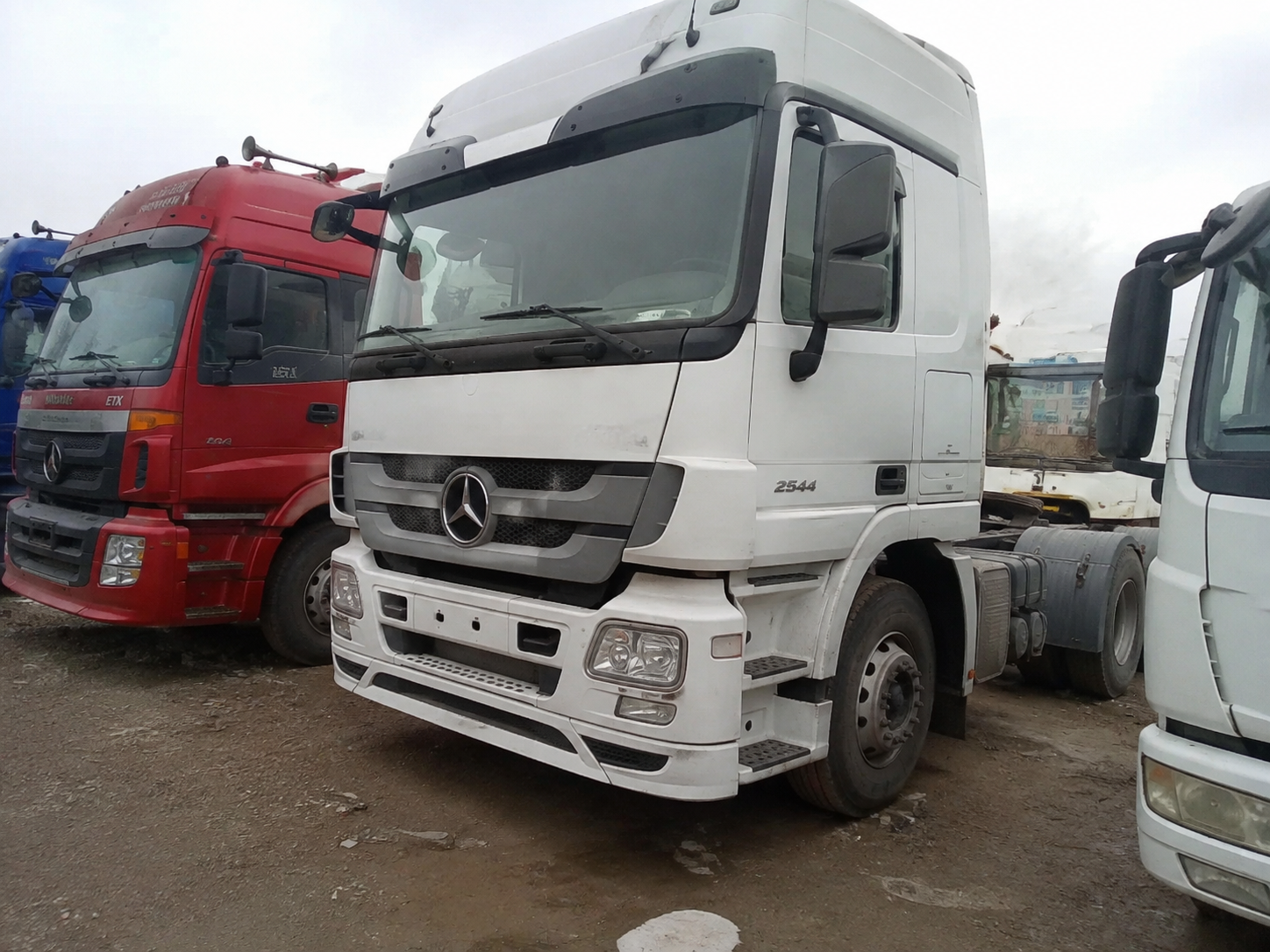
Buying a used semi with a sleeper cab sounds straightforward until you spend your first night parked on a hot, humid highway in West Africa or Southeast Asia and realize the factory cab was never designed for that. The wrong sleeper choice doesn't just cost comfort — it costs driver health, turnover, and loads that don't get delivered on schedule.
The honest answer to "what semis have the best sleepers" is: it depends less on the brand name than on the insulation quality, cooling configuration, and condition of the specific unit you're inspecting. For buyers in tropical and high-heat markets — Africa, Southeast Asia, the Middle East — the single most important upgrade is a rooftop parking cooler. Without it, even a premium sleeper becomes a sweat box at rest stops. Brand comparisons matter, but configuration and modification decisions matter more.
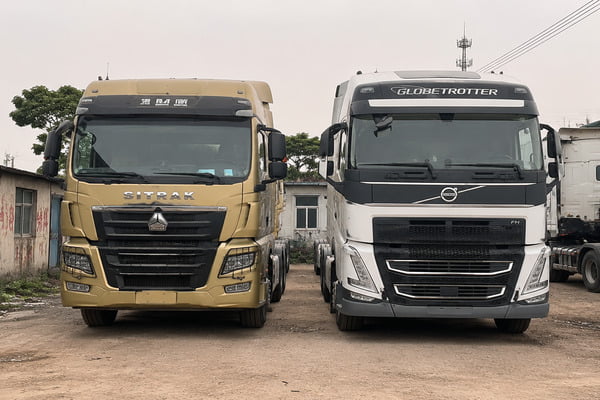
Buyers arrive at our yard with a mental image shaped by Volvo FH or Scania R-series brochures — 750mm+ berth widths, independent HVAC vents in the bunk area, acoustic dampening that makes the engine feel distant. That benchmark is real. It is also largely irrelevant to the markets most of our customers operate in.
European heavy truck sleeper cabs were engineered for European road conditions, European fuel infrastructure, and European regulatory rest requirements. For a buyer operating a cross-border route in tropical West Africa or inland Southeast Asia, comparing directly to a Volvo FH spec sheet creates a false standard that distorts the actual purchase decision.
Understanding this gap doesn't mean accepting a lower standard. It means asking the right questions about the conditions the truck will actually face.
European sleeper cabs are optimized for temperate climates. The integrated HVAC systems — even the premium ones — assume ambient temperatures rarely exceed 35°C for extended periods. They also assume access to shore power at truck stops for overnight parking. Neither assumption holds on a Nairobi–Kampala run or a cross-border haul through the Mekong Delta.
Here's where the mismatch compounds itself:
The point is not that Chinese trucks are categorically better. The point is that spec-matching to local operating conditions beats brand prestige every time. Our customers who've run both European and Chinese brands in West Africa often note that parts sourcing and service access change the real-world ownership calculation completely.
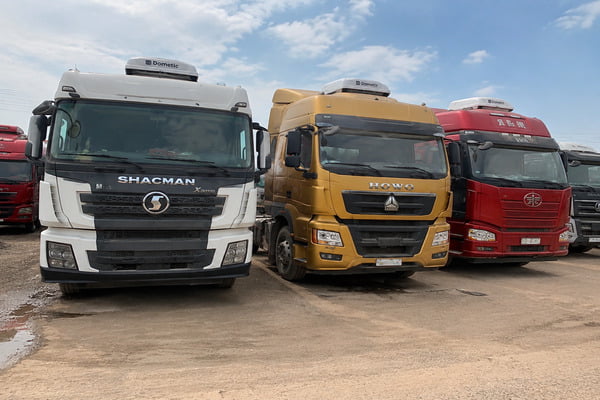
Both SHACMAN and HOWO are the two Chinese heavy truck brands we stock most consistently, and buyers ask us to compare them almost daily. The real differentiator isn't floor space — it's how the cab holds temperature when the truck is parked.
In our experience sourcing and shipping units to tropical markets, SHACMAN X3000 and X6000 high-roof sleeper cabs tend to offer slightly more interior standing height and reportedly better insulation than comparable HOWO T7H configurations at standard trim. However, the meaningful differences between the two brands only emerge at higher option tiers — entry-level trims of both brands are closer than the marketing suggests.
Both platforms have delivered reliably for buyers we work with in Nigeria, Ghana, Vietnam, and the Philippines. The decision usually comes down to which unit, in which condition, is available at the right price point.
The SHACMAN X3000 high-roof cab gives the driver room to stand upright in the bunk area — a practical detail that matters on multi-day hauls. The X6000 steps that up further with a wider berth and more premium interior trim.
From buyers we've worked with directly:
The HOWO T7H is a competent platform with a strong service network in most of our target markets. The sleeper cab is slightly more compact than the SHACMAN X3000 high-roof, but the difference in practice is modest.
Key observations from our inventory:
| Feature | SHACMAN X3000/X6000 High-Roof | HOWO T7H |
|---|---|---|
| Standing height in bunk | Yes (high-roof) | Limited |
| Approx. berth width | ~650–700mm* | ~600–650mm* |
| Insulation (observed) | Reportedly thicker | Standard |
| Parking AC fitment rate (used units) | Variable | Variable |
| Parts availability in Africa/SEA | Good | Strong |
| Entry-level used price range | Comparable | Comparable |
Approximate figures based on inventory observation. Verify on the specific unit before purchase.
This is the point where we are most direct with buyers before a deal closes, because it is the one issue that generates the most post-shipment complaints when it's ignored.
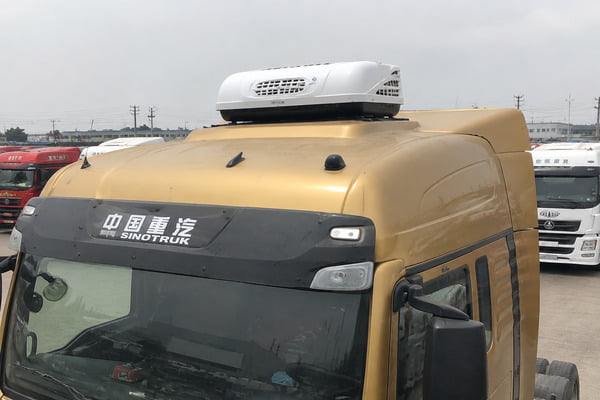
In our experience shipping used trucks to Africa, Southeast Asia, and the Middle East, a rooftop parking cooler — known in China as a 驻车空调 — is not an optional upgrade for long-haul drivers making overnight stops in hot climates. Running the truck's main engine to power the cab AC through the night burns fuel, accumulates engine hours, and shortens component life. A dedicated parking AC solves all three problems at once.

We raise this with every buyer before shipment. Most of the buyers who skip it come back with the same feedback: the truck is fine during the drive; the cab is unbearable when parked at night.
Both SHACMAN and HOWO factory sleeper cabs use a single shared AC unit for both the cab and the bunk area. That system works well while the engine is running. At rest, you have three options:
Used truck buyers consistently underestimate how much the sleeper cab condition degrades with age and heavy use. The drivetrain gets inspected thoroughly; the bunk area often doesn't.
In used Chinese heavy trucks with 300,000–600,000 km on the odometer, buyers should expect foam compression, mattress deterioration, worn curtain tracks, and potential modifications to understorage compartments. These are correctable but must be budgeted for — they are not deal-breakers but they are not cosmetic issues either.
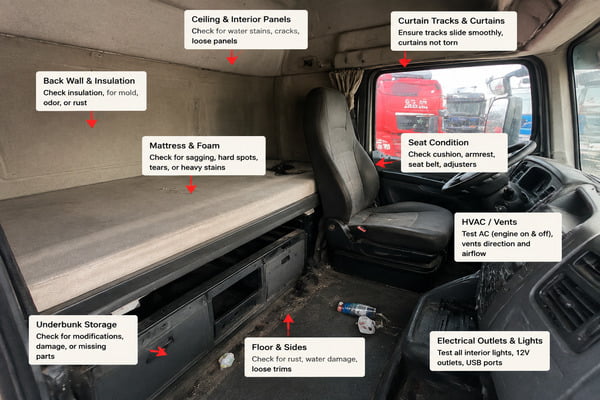
We walk buyers through the following checklist before every shipment. It applies equally if you're inspecting a unit at a lot yourself.
Structure and sealing:
Bunk and comfort components:
Cooling and ventilation:
Electrical:
General wear indicators:
Chinese heavy truck sleeper cabs in the SHACMAN and HOWO range are functional and cost-effective but narrower and less acoustically refined than European counterparts. For buyers in Africa, Southeast Asia, and the Middle East, the more important questions are cooling capability and parts availability in-region — both of which favor Chinese platforms.
Based on consistent buyer feedback from our customers in West Africa, East Africa, and Southeast Asia, yes. Running overnight without a parking cooler in 30–40°C ambient conditions is not a comfort issue — it is a driver health and fatigue issue. We recommend budgeting for this modification before the first long-haul run.
Approximately 650–700mm in high-roof configurations, depending on build year and option package. This is narrower than premium European truck berths. Always measure the specific unit you are inspecting — used trucks may have aftermarket bunk modifications.
It can be an advantage, but verify the unit is functional before purchase. Test the compressor output, inspect the roof penetration seal, and confirm the battery bank is adequate to run it overnight. A fitted-but-failing parking AC unit adds cost, not value.
Budget varies widely by unit condition. As a rough guide: mattress and foam replacement is low-cost. A new rooftop parking AC plus installation is a more significant line item but essential for tropical markets. Electrical and seal repairs are typically minor. Factor reconditioning into your total acquisition cost before comparing prices across units.
The question "what semis have the best sleepers?" is a starting point, not an answer. For buyers running multi-day hauls in tropical or high-heat markets, sleeper cab quality comes down to three things: insulation performance at rest, cooling configuration — specifically whether a parking AC is fitted or planned — and the actual condition of the bunk area on the specific used unit you're buying.
SHACMAN X3000 and X6000 high-roof cabs offer slightly more space and reportedly better insulation for heat markets. HOWO T7H offers a strong parts network. Neither platform delivers a livable overnight environment without a parking cooler in ambient temperatures above 30°C. That modification is not optional — it is the single most impactful decision in the entire sleeper cab evaluation.
If you're evaluating used SHACMAN or HOWO trucks with sleeper cabs for African, Southeast Asian, or Middle Eastern routes, we're happy to walk you through current inventory and pre-shipment condition specifics. Contact us directly to discuss which units match your route, climate, and budget — and what modifications we recommend before the truck leaves the yard.
Tell us your requirements — brand, horsepower, year and quantity — and we'll match the right option for you.