hanchaoyang94@gmail.com
13 min read
hanchaoyang94@gmail.com
13 min read
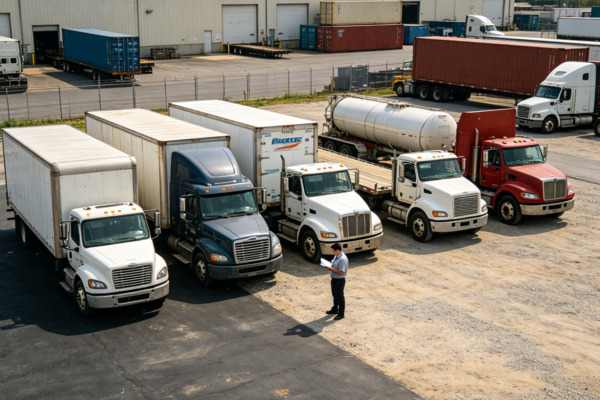
Freight trucks play an important role in modern transportation and logistics.
They are used by trucking companies, freight carriers, logistics businesses, manufacturers, distributors, contractors, and independent truck operators to move goods from one location to another.
Different types of freight require different truck configurations.
For example:
Because of these differences, there is no single freight truck that is suitable for every transportation application.
Many buyers and new operators therefore ask the same question:
"What are the 7 types of freight trucks?"
The answer can vary depending on how freight trucks are classified.
For practical commercial transportation purposes, seven common types include:
Each type is designed for a different transportation requirement.
The main differences can include:
For example:
A box truck may be ideal for local deliveries, while a truck tractor pulling a dry van trailer may be more suitable for long-distance freight transportation.
A flatbed can transport large machinery that cannot easily fit inside an enclosed trailer.
A refrigerated truck can maintain controlled temperatures for food and other temperature-sensitive products.
The best freight truck depends on the type of cargo, transportation distance, loading requirements, operating environment, and business needs.
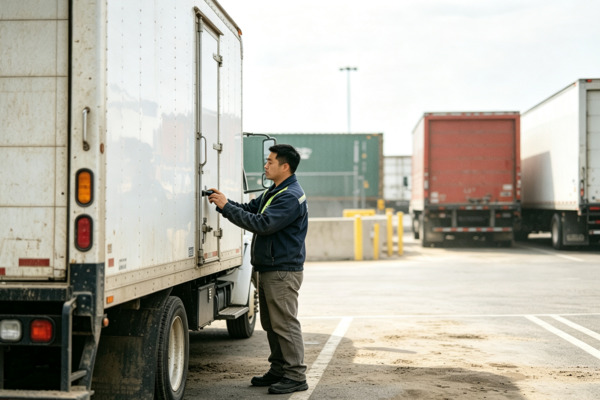
The seven types of freight trucks serve different transportation applications.
Understanding their basic configurations can help buyers choose equipment that matches their cargo and operating requirements.
| Freight Truck Type | Common Application | Main Advantage |
|---|---|---|
| Box truck | Local deliveries and general freight | Enclosed cargo space |
| Dry van tractor-trailer | Long-distance general freight | Large cargo capacity |
| Refrigerated truck | Food and temperature-sensitive freight | Temperature control |
| Flatbed truck | Machinery and construction materials | Easy loading of oversized cargo |
| Step deck truck | Tall or heavy equipment | Lower deck height |
| Tank truck | Liquids and bulk materials | Designed for liquid transportation |
| Dump truck | Gravel, sand, soil, and construction materials | Efficient unloading |
These truck types can vary significantly in size, configuration, payload capacity, and equipment.
Some are designed primarily for local transportation.
Others are commonly used for regional or long-distance freight.
Choosing the correct truck type can improve transportation efficiency, reduce operating problems, and help businesses avoid paying for equipment they do not need.
Box trucks are one of the most common types of freight vehicles.
They use an enclosed cargo body that is permanently mounted to the truck chassis.
The enclosed body protects freight from:
Box trucks are commonly used for:
One major advantage of a box truck is its simple configuration.
The cargo body and truck are integrated into one vehicle.
This means the operator does not need a separate trailer for normal operation.
Box trucks are particularly useful for businesses making frequent local deliveries.
For example:
A furniture company may use a box truck to deliver products directly from a warehouse to customers.
A logistics company may also use smaller box trucks for urban delivery routes.
However, box trucks generally provide less flexibility than a truck tractor because the cargo body is permanently attached to the chassis.
Box trucks are a practical choice for businesses that need an enclosed cargo area and frequent local or regional deliveries.
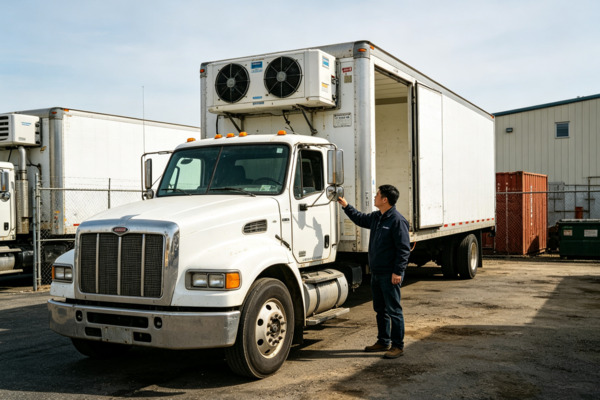
Truck tractors pulling dry van trailers are among the most widely used freight combinations in North American transportation.
A truck tractor provides:
The dry van trailer provides the enclosed cargo space.
This configuration is commonly used for:
One of the biggest advantages is flexibility.
A trucking company can use the same tractor with different trailers depending on its transportation requirements.
Dry van trailers also provide protection from:
This makes them suitable for a wide range of general freight.
For long-haul transportation, sleeper tractors may be used to provide additional driver accommodation.
Day cab tractors are often used for shorter regional operations.
Truck tractors with dry van trailers are one of the most versatile freight transportation configurations for general cargo.
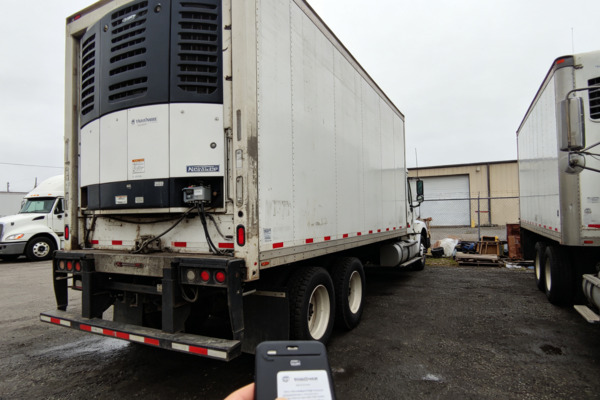
Refrigerated trucks, commonly called reefer trucks, are designed to transport temperature-sensitive freight.
They use insulated cargo bodies or refrigerated trailers equipped with refrigeration systems.
Common cargo includes:
The refrigeration system is a critical component.
A typical reefer system may include:
Unlike a standard dry van, a refrigerated truck requires additional equipment and maintenance.
Buyers should consider:
A refrigeration problem can potentially damage cargo and create significant business losses.
Refrigerated trucks are essential when freight must remain within a controlled temperature range during transportation.
Flatbed trucks use an open cargo platform instead of an enclosed cargo body.
This makes them especially useful for large, heavy, or unusually shaped freight.
Common cargo includes:
One of the biggest advantages of a flatbed is loading flexibility.
Cargo can often be loaded from:
depending on the equipment and loading environment.
Flatbed freight may also use:
Because the cargo is exposed to the environment, proper load securement is extremely important.
Buyers should also inspect:
Flatbed trucks are particularly valuable for freight that is too large, too tall, or otherwise unsuitable for enclosed trailers.
Step deck trucks, also known as drop deck trailers, are designed to provide a lower cargo deck than a standard flatbed.
This configuration can be useful when transporting taller equipment or machinery.
Common cargo includes:
The lower deck height provides additional vertical clearance.
This can allow certain types of cargo to be transported while remaining within applicable height limitations.
Step deck trailers generally include:
Buyers should inspect:
Step deck equipment can be particularly useful for businesses transporting machinery that is too tall for a conventional flatbed configuration.
Step deck trucks provide additional loading flexibility when cargo height is an important transportation consideration.
Tank trucks are specialized freight vehicles designed to transport liquids, gases, or certain bulk materials.
Depending on the tank configuration, they may transport:
Tank trucks require specialized equipment because the cargo is not transported in conventional boxes or pallets.
Important components may include:
The specific tank design depends heavily on the cargo being transported.
For example:
A food-grade tank may have different requirements from a fuel transportation tank.
A chemical tank may require specialized materials and safety systems.
Because of this, buyers should carefully verify whether the truck and tank configuration are suitable for the intended application.
Tank trucks are specialized freight vehicles, and their value depends heavily on the tank design, cargo application, condition, and regulatory requirements.
Dump trucks are commonly used to transport and unload bulk materials.
They are especially common in:
Typical cargo includes:
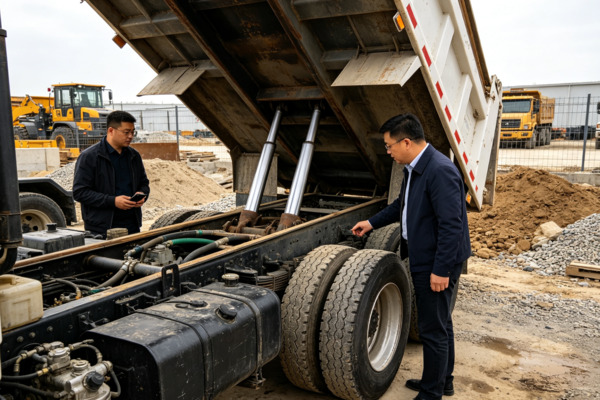
A dump truck normally uses a hydraulic system to raise the dump body and unload materials.
Important components include:
The condition of these components can have a major effect on the truck's value and operating reliability.
Buyers should inspect:
Dump trucks may also have different axle configurations depending on their intended application.
Dump trucks are designed for efficient transportation and unloading of bulk materials, making them particularly important for construction and material-hauling businesses.
Although all seven types can be used to transport freight, their configurations and applications are very different.
The main differences include:
| Factor | Box Truck | Dry Van | Reefer | Flatbed | Step Deck | Tank Truck | Dump Truck |
|---|---|---|---|---|---|---|---|
| Enclosed cargo | Yes | Yes | Yes | No | No | Tank | No |
| Temperature control | Usually no | No | Yes | No | No | Application dependent | No |
| Oversized cargo | Limited | Limited | Limited | Good | Excellent | Limited | Limited |
| Bulk materials | Limited | Limited | Limited | Possible | Possible | Excellent for liquids | Excellent |
| Local delivery | Excellent | Good | Good | Good | Limited | Application dependent | Good |
| Long-haul freight | Possible | Excellent | Excellent | Excellent | Excellent | Application dependent | Limited |
| Specialized equipment | Moderate | Low | High | Moderate | High | Very high | High |
The right choice depends on what the business needs to transport.
For example:
A logistics company transporting boxed consumer products may prefer dry van equipment.
A food distributor may require refrigerated equipment.
A construction company transporting excavators may prefer a flatbed or step deck.
A liquid transportation company may require a tank truck.
A contractor moving gravel or soil may need a dump truck.
The correct freight truck is determined by the cargo and application—not simply by the purchase price of the vehicle.
Before purchasing a freight truck, buyers should first define their transportation requirements.
A useful evaluation process includes several steps.
Determine:
Consider whether the truck will be used for:
A long-haul application may require a different truck configuration from a local delivery business.
Consider:
Choosing equipment with insufficient capacity can limit business operations.
Choosing equipment with excessive capacity can increase unnecessary purchase and operating costs.
Different freight requires different loading methods.
Buyers should consider whether cargo will be loaded using:
This can help determine whether an enclosed, open-deck, tank, or dump configuration is most appropriate.
Buyers should also consider:
A truck with a lower purchase price may not necessarily have lower total operating costs.
Before purchasing used freight equipment, inspect:
Maintenance records should also be reviewed whenever available.
Choosing a freight truck based on the actual transportation application can help businesses avoid unnecessary equipment costs and improve long-term operating efficiency.
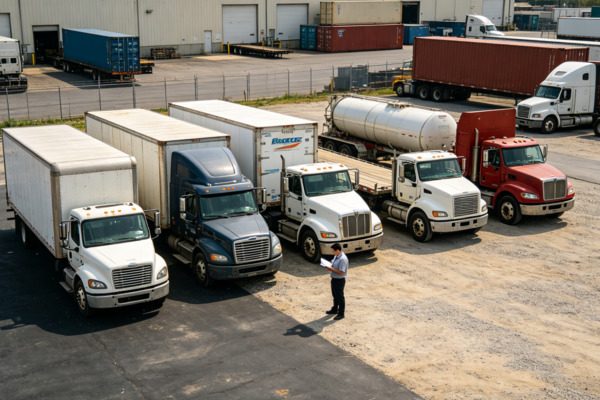
Businesses may also need to decide whether to purchase a new or used freight truck.
A new truck can provide:
However, new equipment generally requires a higher initial investment.
A used freight truck can provide:
However, buyers must pay closer attention to:
For many small businesses and independent operators, used freight trucks can provide a practical way to expand transportation capacity without the cost of purchasing new equipment.
A properly inspected used freight truck can provide strong business value when its condition, configuration, and operating costs match the intended application.
The advertised purchase price is only one part of the total investment.
Buyers should also consider:
For international buyers, additional costs may include:
For example:
A used freight truck may be advertised at $60,000.
After purchase, the buyer may need to spend additional money on:
The final investment can therefore be significantly higher than the advertised price.
Professional buyers calculate the total acquisition and operating cost before deciding which freight truck provides the best value.
The true cost of a freight truck is the total amount required to acquire, repair, transport, maintain, and operate it—not simply the advertised selling price.
There are many different types of freight trucks, and each configuration is designed for a specific transportation purpose.
The seven common types discussed in this article include:
Each type has different advantages and limitations.
A box truck may be ideal for local deliveries.
A dry van tractor-trailer may be better for long-distance general freight.
A reefer is designed for temperature-sensitive products.
A flatbed or step deck can handle large machinery and construction materials.
A tank truck is designed for specialized liquid transportation.
A dump truck is useful for bulk construction and landscaping materials.
The best choice depends on:
The best freight truck is not necessarily the largest, newest, or most expensive truck. It is the truck configuration that can safely and efficiently perform the required work while providing reasonable long-term operating value.
Tell us your requirements — brand, horsepower, year and quantity — and we'll match the right option for you.