hanchaoyang94@gmail.com
Updated August 13, 2026
17 min read
hanchaoyang94@gmail.com
Updated August 13, 2026
17 min read
Buying a used semi-truck requires more than checking the engine, mileage, and purchase price.
For fleet owners, transportation companies, construction businesses, agricultural operators, and international truck buyers, understanding the truck’s equipment configuration is extremely important.
One common question many buyers ask is:
"Do semi trucks have a PTO?"
The short answer is yes.
Many semi-trucks can be equipped with a PTO (Power Take-Off), but not every truck comes with one installed.
A PTO is a mechanical system that allows the truck engine or transmission to provide power to external equipment.
Instead of using a separate power source, the truck itself can operate additional equipment such as:
However, whether a semi-truck needs a PTO depends completely on the truck’s intended application.
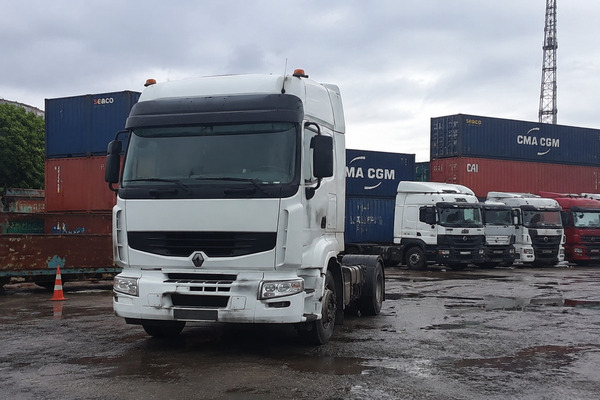
A standard highway tractor used for long-distance freight transportation may not require a PTO.
A truck used for construction, agriculture, waste management, or specialized transportation may depend on PTO capability.
Before purchasing a used semi-truck, buyers should understand that equipment configuration can directly affect:
A truck with the wrong configuration may create additional expenses after purchase.
For example:
A buyer may purchase an affordable semi-truck without PTO and later discover that the vehicle cannot operate the required hydraulic equipment.
Adding a PTO system afterward may require:
These costs can reduce the original savings.
Semi trucks can have PTO systems, but the best choice depends on the work the truck needs to perform. Buyers should evaluate the complete truck configuration instead of focusing only on price or appearance.
Before choosing a semi-truck with or without PTO, buyers should understand one important point:
A commercial truck is not only a transportation vehicle.
It is a business tool.
The right configuration can improve productivity and create long-term value.
The wrong configuration can lead to:
Professional buyers do not only ask:
"How much does this truck cost?"
They ask:
"Can this truck complete the required work efficiently after purchase?"
This is especially important for used truck buyers because many second-hand trucks have already been configured for previous applications.
A truck’s previous working environment can provide valuable information.
For example:
A truck previously used for highway freight may have:
A truck previously used for heavy-duty applications may experience:
Understanding the truck’s history helps buyers make better purchasing decisions.
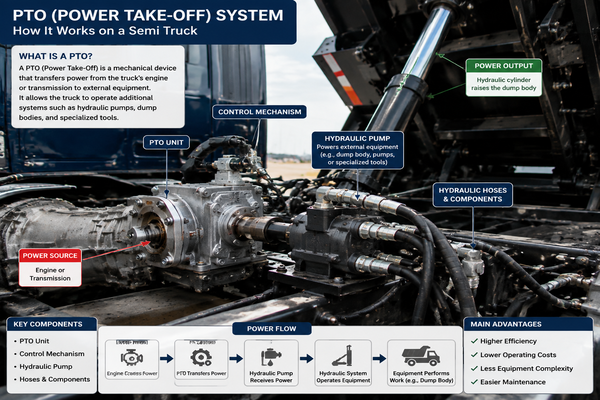
PTO stands for Power Take-Off.
It is a mechanical device that transfers power from the truck’s engine or transmission to external equipment.
In simple terms:
The engine creates power.
The PTO redirects part of that power to operate another system.
This allows one truck to perform multiple functions without requiring a separate engine.
A PTO system usually includes:
The exact design depends on:
For example:
A dump truck may use a PTO to power the hydraulic cylinder that raises and lowers the dump body.
A tanker truck may use PTO power to operate pumping equipment.
A utility truck may use PTO capability to operate specialized tools.
The main advantage of a PTO system is efficiency.
Instead of installing another power source, the truck can use its existing engine power.
This can reduce:
However, PTO systems also require proper maintenance.
A poorly maintained PTO system may create problems such as:
A PTO is valuable because it increases truck capability, but reliability depends on proper installation, maintenance, and correct application.
Understanding how a PTO works helps buyers evaluate whether a truck matches their operational needs.
A PTO transfers mechanical power from the truck’s power system to external equipment.
The process generally works like this:
For example:
A dump truck operator activates the PTO.
The PTO powers the hydraulic pump.
The hydraulic system lifts the dump body.
Without the PTO, the hydraulic equipment would need another independent power source.
Different PTO systems may connect to different parts of the truck.
Common types include:
This type connects directly to the transmission.
Advantages include:
This connects directly to the engine.
It may be used for applications requiring continuous power.
This type is often used in specialized applications requiring additional equipment operation.
The correct PTO type depends on:
When purchasing a used semi-truck, buyers should confirm that the PTO system matches the equipment they plan to operate.
No.
Not every semi-truck comes with a PTO installed.
Many standard highway tractors are designed mainly for:
These trucks may not require PTO capability because their primary function is moving cargo.
For example:
A sleeper tractor used for interstate transportation usually focuses on:
A PTO system may provide little additional value for this type of operation.
However, specialized trucks often require PTO systems because they need to operate additional equipment.
Common PTO applications include:
When buying a used semi-truck, buyers should not assume that every vehicle has PTO capability.
They should confirm:
A missing PTO does not automatically mean the truck is a poor choice.
It only means the truck may be designed for a different purpose.
For example:
A long-haul fleet may prefer a truck without PTO because it can reduce:
On the other hand, a construction company may consider PTO capability essential.
The value of a PTO depends on the job the truck performs. Buyers should choose the right configuration instead of paying for features they do not need.
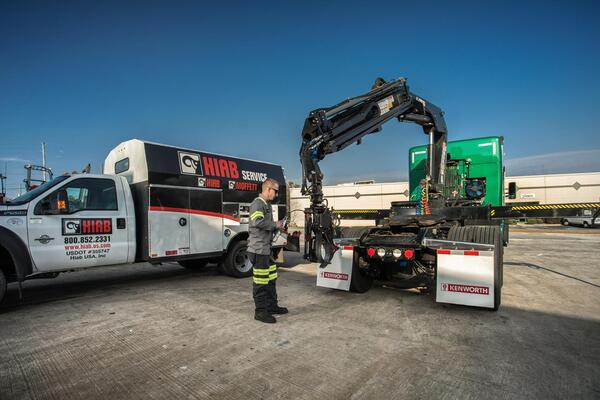
Different industries have different equipment requirements.
A PTO is especially important when a truck needs to provide power to external systems.
Below are some common applications.
Dump trucks are one of the most common PTO applications.
The PTO powers the hydraulic system that controls:
For construction and material transportation businesses, PTO reliability directly affects daily productivity.
A damaged PTO system can prevent the truck from completing normal operations.
When purchasing a used dump truck, buyers should inspect:
A truck that has been heavily used in construction may require more careful inspection because of demanding working conditions.
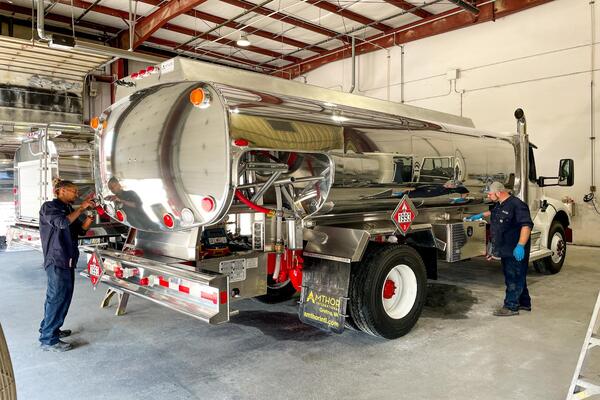
Tank trucks often use PTO systems for specialized operations.
Examples include:
PTO systems may operate:
For these applications, buyers should pay attention to:
A tanker truck with a reliable PTO system can provide significant operational advantages.
Construction operations often require trucks that can perform more than simple transportation.
PTO-equipped trucks may operate:
Construction environments can create higher stress on truck components.
Buyers should carefully evaluate:
Agricultural businesses may use PTO-equipped trucks for:
Because agricultural applications vary widely, buyers should confirm exactly what equipment the truck needs to operate.
Utility companies often require PTO systems for:
In these applications, uptime is extremely important.
A reliable PTO system can help technicians complete work more efficiently.
The best PTO-equipped semi-truck is not the one with the most equipment. It is the one that provides the right capability for the specific operation.
A common question among used truck buyers is:
"Does a PTO make a semi-truck worth more?"
The answer depends on the market and intended use.
A PTO can increase value when the truck is designed for industries that require additional equipment.
For example:
A PTO-equipped truck may be more attractive to:
However, a PTO may not increase value for every buyer.
A long-haul freight company may not need PTO capability.
In that case, paying extra for a PTO system may not provide additional business value.
The value of a PTO-equipped truck depends on:
A well-maintained PTO system can increase flexibility.
A poorly maintained PTO system can become an additional repair expense.
Potential problems include:
A PTO can increase a truck’s value only when it supports the buyer’s actual business needs. Extra equipment does not automatically create extra value.
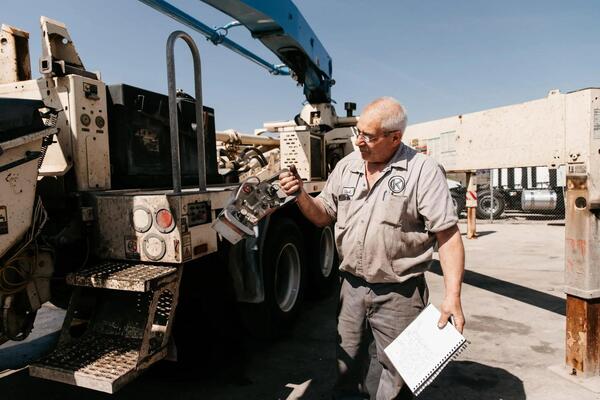
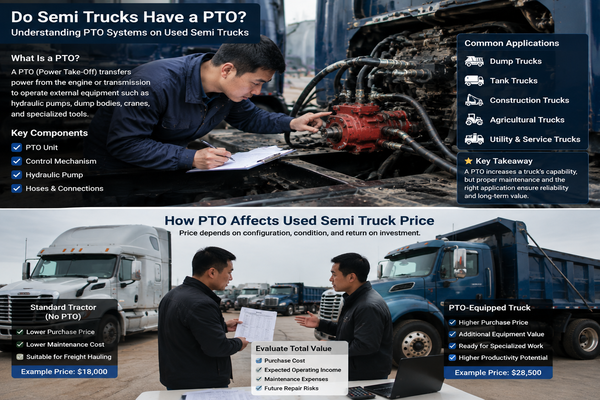
PTO capability can influence the price of a used semi-truck.
However, it is only one factor among many.
Used truck prices are also affected by:
A PTO-equipped truck may cost more because it includes:
However, buyers should consider whether the additional cost provides practical benefits.
For example:
A construction company may find a PTO-equipped truck worth paying more for because it can immediately perform required work.
A general freight company may prefer a lower-cost standard tractor.
The correct purchasing decision depends on return on investment.
Before buying, customers should calculate:
A truck that costs more initially may generate greater value if it reduces downtime and improves productivity.
Buying a used semi-truck with a PTO requires more than checking whether the system exists.
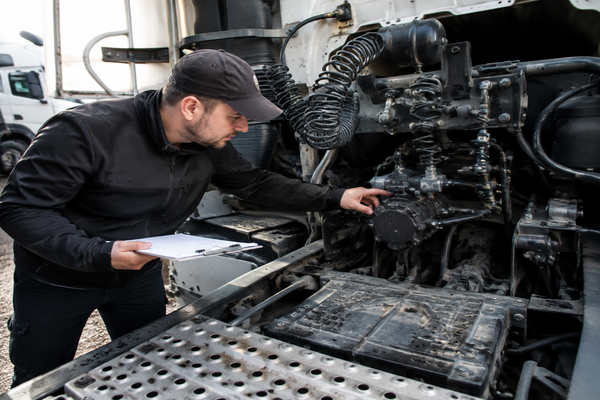
A PTO system may appear functional during a quick inspection, but hidden problems can create expensive repairs after purchase.
Professional buyers should evaluate the complete condition of the truck and PTO system before making a decision.
Important inspection areas include:
A proper inspection helps buyers understand whether the truck can continue working reliably after purchase.
The first step is confirming that the PTO operates correctly.
Buyers should check:
A PTO that does not engage properly may indicate:
Small issues can become expensive repairs if ignored.
Many PTO systems work together with hydraulic equipment.
Buyers should inspect:
A damaged hydraulic system can affect the truck’s ability to perform its intended job.
For example:
A dump truck with PTO capability may not be useful if the hydraulic lifting system cannot operate correctly.
The PTO must match the truck’s transmission system.
Buyers should confirm:
An incorrectly matched PTO system may cause:
Maintenance history provides important information about previous ownership.
Review:
A truck with complete maintenance records is usually easier to evaluate.
A truck with unknown history creates more uncertainty.
The previous use of the truck can affect PTO condition.
For example:
A construction truck may experience:
A highway truck may experience:
Understanding the truck’s background helps buyers estimate future maintenance needs.
A used PTO-equipped semi-truck should be evaluated as a complete working system, not only as a vehicle with additional equipment.

The answer depends on the type of work the truck will perform.
A PTO-equipped truck is not automatically better.
A standard truck without PTO may be the better choice for certain businesses.
The right decision depends on:
A PTO-equipped truck may be the right choice for businesses that require:
Examples include:
For these buyers, PTO capability can improve productivity.
A PTO may not be necessary for businesses focused on:
These buyers may benefit more from focusing on:
Paying extra for unused equipment may not provide financial benefits.
Before purchasing, buyers should ask:
The best truck is the one that supports the business operation.
Buyers should choose truck capability based on actual work requirements, not simply because additional features appear valuable.
In some cases, a PTO can be added after purchasing a semi-truck.
However, installation is not always simple.
The possibility depends on:
Adding a PTO later may require:
These modifications can create additional costs.
Buyers should also consider downtime during installation.
For businesses that depend on daily transportation income, downtime can affect profitability.
For example:
A buyer may save money by purchasing a cheaper truck without PTO.
However, after adding:
The total investment may become higher than purchasing a properly configured truck initially.
When buyers already know they need PTO capability, selecting the correct truck configuration before purchase is often the more economical choice.
Many buyers focus only on whether a truck has a PTO.
However, several important factors should also be considered.
Common mistakes include:
A PTO does not automatically make a truck valuable.
A buyer should confirm:
A PTO system with unknown service history may create unexpected costs.
Always check:
A truck may have excellent PTO capability but still not match the buyer’s needs.
Examples:
A cheaper truck may require:
The initial price does not represent the complete investment.
Professional buyers calculate:
No.
Many semi-trucks do not have PTO systems.
PTO capability depends on the truck’s purpose and configuration.
A PTO transfers power from the truck engine or transmission to external equipment.
It is commonly used for:
Sometimes.
A PTO system can increase value for buyers who need specialized capability.
However, value depends on the application and condition of the truck.
Yes, in some cases.
However, installation depends on truck compatibility and may create additional costs.
Usually not necessary.
Most long-haul operations focus on:
A PTO is more important for specialized applications.
Buyers should check:
A professional inspection is recommended before purchase.
So, do semi trucks have a PTO?
Yes, many semi-trucks can have PTO systems, but not every truck includes one.
A PTO can provide important advantages for businesses that require additional equipment power, including:
However, PTO capability alone does not determine whether a used truck is a good investment.
Buyers should evaluate:
The most important question is not:
"Does this truck have a PTO?"
The better question is:
"Can this truck perform the required work reliably and profitably?"
The best semi-truck is not the one with the most features. It is the one with the right configuration, reliable performance, and the ability to support long-term business operations.
At Deli Auto, we help customers evaluate used commercial trucks through vehicle selection, inspection support, export preparation, and professional purchasing assistance.
Our goal is not only to provide affordable trucks.
Our goal is to help customers choose reliable commercial vehicles that create long-term business value.
Tell us your requirements — brand, horsepower, year and quantity — and we'll match the right option for you.