hanchaoyang94@gmail.com
Updated August 13, 2026
8 min read
hanchaoyang94@gmail.com
Updated August 13, 2026
8 min read

Buying a used semi-truck is an important decision for fleet owners, transportation companies, and independent operators who want to expand their business while controlling investment costs.
Compared with purchasing a new truck, buying a used semi-truck can significantly reduce upfront expenses and allow companies to increase transportation capacity faster.
However, many buyers face the same question:
"Where is the cheapest state to buy a semi-truck?"
At first, the answer may seem simple:
Find the state with the lowest truck prices.
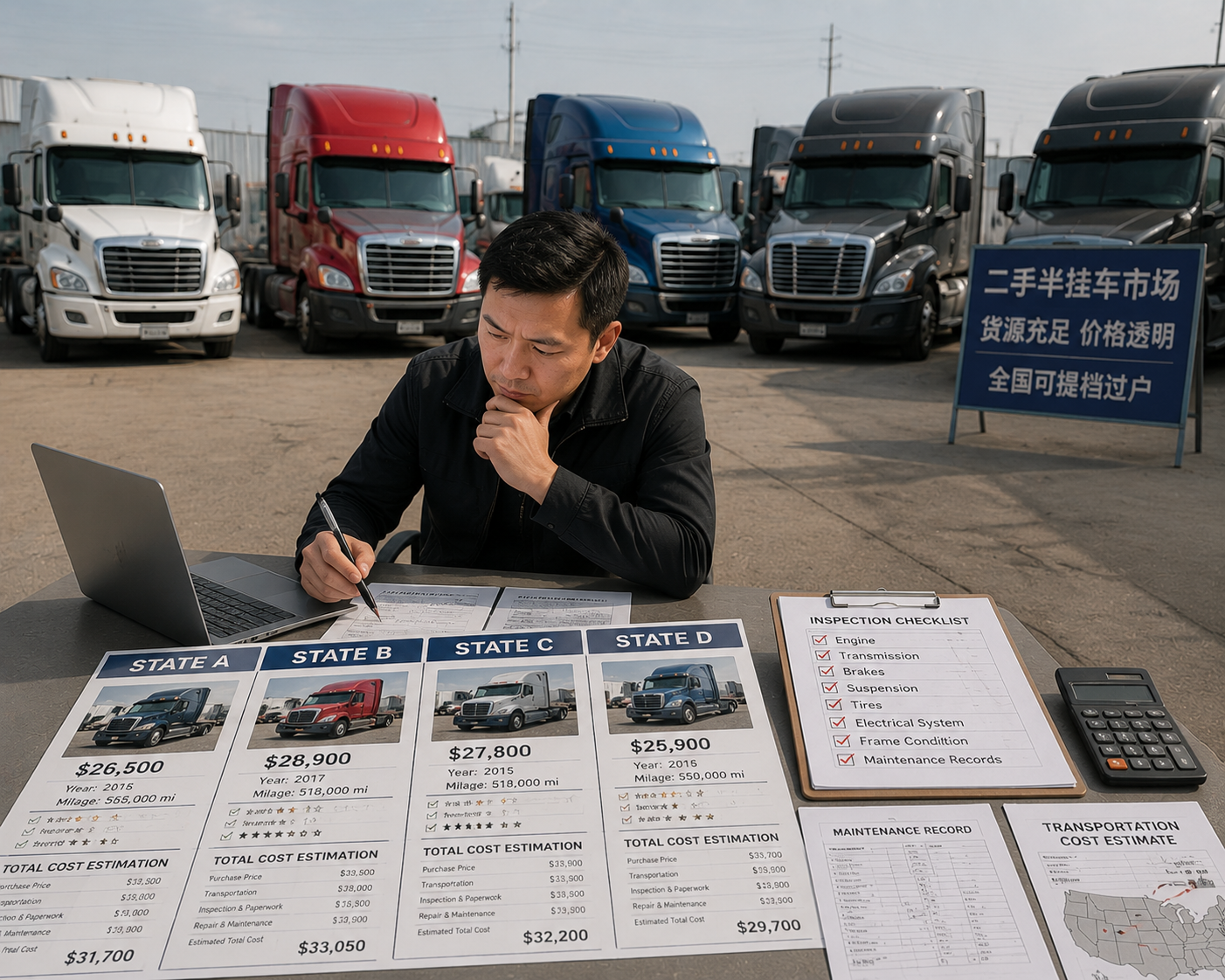
However, experienced buyers understand that the cheapest purchase price does not always mean the lowest total cost.
Used semi-truck prices vary between states because of factors such as:
A truck that appears cheaper in one state may require expensive repairs or transportation costs after purchase.
A slightly more expensive truck with better maintenance records may provide much better long-term value.
The cheapest state to buy a semi-truck is not always the state with the lowest asking price. The best purchase decision comes from balancing truck condition, total cost, reliability, and business requirements.
Before deciding where to purchase a used semi-truck, buyers should understand one important point:
Buying a truck is not only about location.
It is about long-term operating value.
A reliable semi-truck can generate revenue for years, while a poorly selected truck can create:
Professional buyers evaluate the complete investment instead of focusing only on the purchase price.
Used semi-truck prices are affected by local market conditions.
Different states may have different:
States with large trucking industries usually have more used trucks available because companies regularly replace fleet vehicles.
This can create:
However, more inventory does not always mean better value.
Buyers still need to check:
A truck from a large trucking market may have a good highway history, but another truck may have experienced heavier working conditions.
A lower price should always be investigated. Buyers need to understand why a truck is cheaper before deciding whether it is a good deal.
There is no single state that always has the cheapest semi-trucks.
However, some states often provide competitive pricing because of their large commercial vehicle markets.
Texas has one of the largest transportation markets in the United States.
Potential advantages include:
However, buyers should still inspect:
Florida has an active commercial vehicle market with many used trucks available.
Advantages may include:
Buyers should pay attention to:
Midwest markets often have strong transportation activity.
Advantages may include:
However, buyers should carefully check:
Many buyers consider purchasing from another state because prices may appear lower.
However, the actual cost includes more than the purchase price.
Additional expenses may include:
For example:
A truck that is $5,000 cheaper may not actually save money if transportation and repairs add thousands of dollars.
Professional buyers calculate the complete investment before making a decision.
The lowest advertised price does not always create the lowest ownership cost.
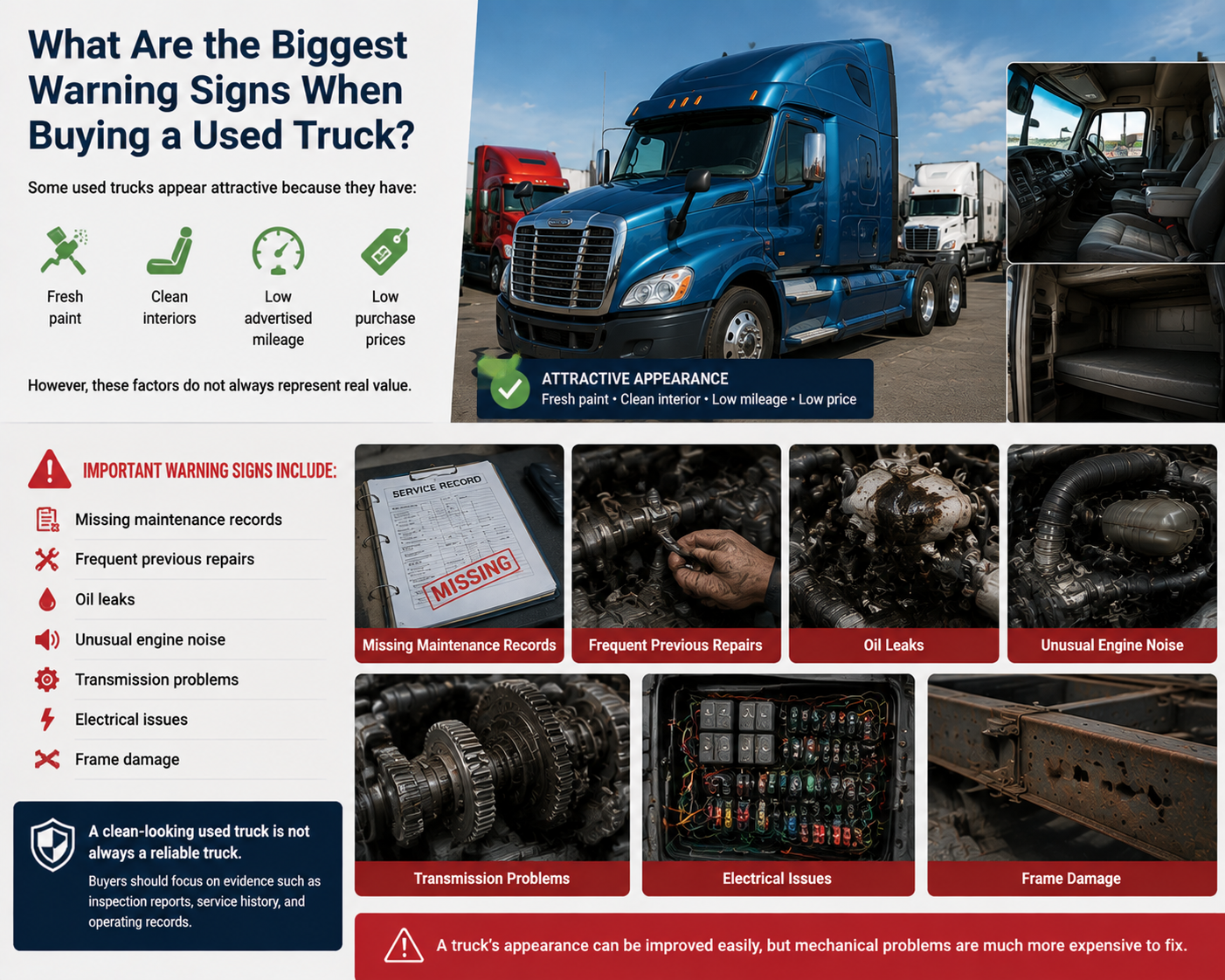
A lower-priced semi-truck requires careful evaluation.
Important inspection areas include:
Buyers should also review:
A clean appearance does not always represent good mechanical condition.
Many expensive problems are hidden.
A used semi-truck should be evaluated as a business asset, not only as a low-cost vehicle. Mechanical reliability determines whether the truck creates value after purchase.
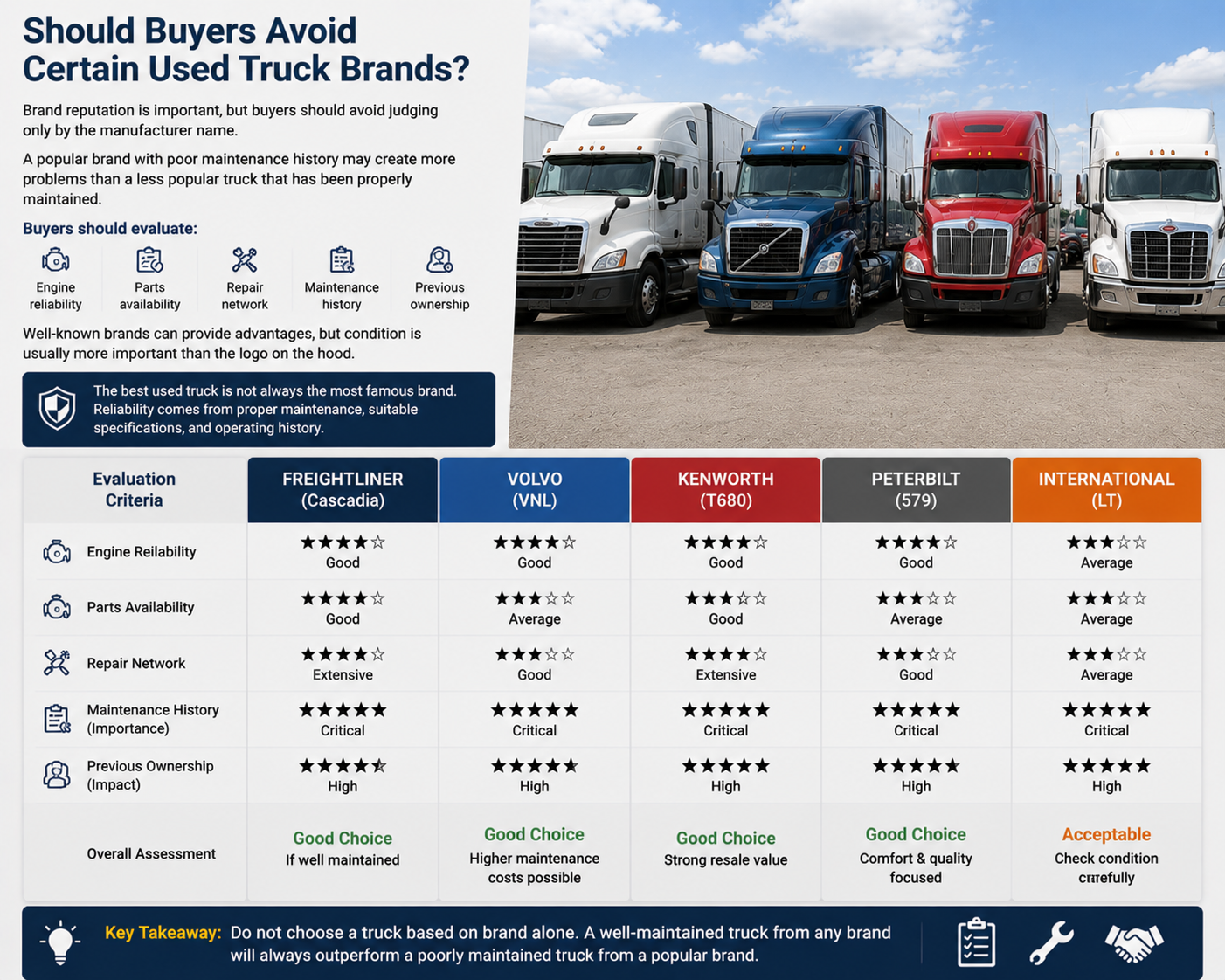
Brand reputation can influence purchasing decisions, but it should not be the only factor.
Many buyers consider brands such as:
Different brands may provide advantages in:
However, a famous brand with poor maintenance history may create more problems than a properly maintained truck from another manufacturer.
The condition and maintenance history of a used semi-truck are usually more important than the brand name alone.
The cheapest semi-truck is not always the right semi-truck.
Different operations require different configurations.
Long-distance operations usually require:
Heavy-duty operations usually require:
Regional operations often require:
A truck designed for one purpose may not perform efficiently in another environment.
The best value comes from choosing a truck that matches the workload, road conditions, and maintenance capability of the operation.
Many buyers calculate only the purchase price.
This is one of the biggest mistakes in used truck purchasing.
The real ownership cost includes:
A cheaper truck can become expensive if it requires frequent repairs or cannot operate efficiently.
A reliable truck with predictable costs often provides better business value.
The cheapest semi-truck is not always the most economical choice. Long-term reliability determines the real return on investment.
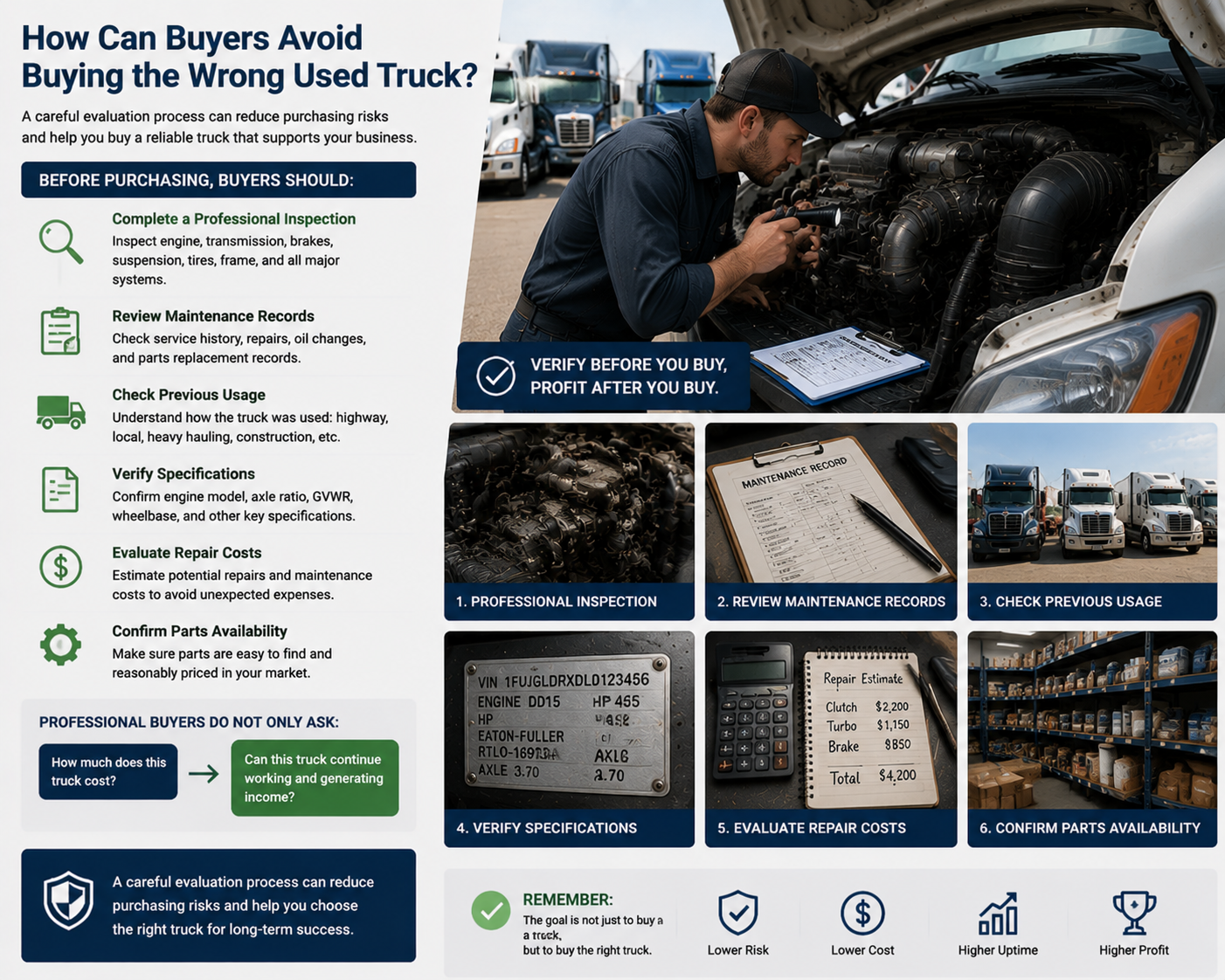
Before buying a used semi-truck, buyers should:
Professional buyers do not only ask:
"How much does this truck cost?"
They ask:
"Can this truck continue working and generating income?"
A careful evaluation process helps reduce purchasing risks.
There is no single cheapest state. Prices depend on inventory, demand, vehicle condition, and operating history.
Texas often has competitive pricing because of its large trucking market, but buyers should still compare condition and total ownership costs.
No.
The cheapest truck may have hidden repair problems or higher future operating costs.
Sometimes.
However, transportation, inspection, and preparation costs should be included before making a final decision.
So, where is the cheapest state to buy a semi-truck?
The answer depends on more than location.
A successful purchase requires balancing:
The cheapest truck is not always the best investment.
The best used semi-truck is the one that can operate reliably, reduce downtime, and create value for your business.
At Deli Auto, we help customers evaluate used semi-trucks through vehicle selection, inspection support, export preparation, and professional purchasing assistance.
Our goal is not only to provide affordable trucks.
Our goal is to help customers choose reliable commercial vehicles that support long-term business growth.
Tell us your requirements — brand, horsepower, year and quantity — and we'll match the right option for you.