hanchaoyang94@gmail.com
19 min read
hanchaoyang94@gmail.com
19 min read
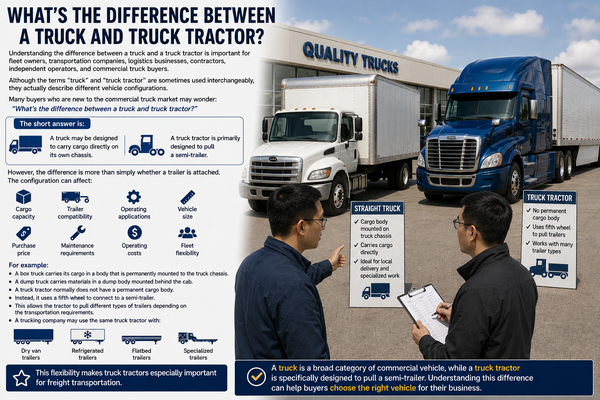
Understanding the difference between a truck and a truck tractor is important for fleet owners, transportation companies, logistics businesses, contractors, independent operators, and commercial truck buyers.
Although the terms "truck" and "truck tractor" are sometimes used interchangeably, they actually describe different vehicle configurations.
Many buyers who are new to the commercial truck market may wonder:
"What's the difference between a truck and truck tractor?"
The short answer is:
A truck may be designed to carry cargo directly on its own chassis.
A truck tractor is primarily designed to pull a semi-trailer.
However, the difference is more than simply whether a trailer is attached.
The configuration can affect:
For example:
A box truck carries its cargo in a body that is permanently mounted to the truck chassis.
A dump truck carries materials in a dump body mounted behind the cab.
A truck tractor normally does not have a permanent cargo body.
Instead, it uses a fifth wheel to connect to a semi-trailer.
This allows the tractor to pull different types of trailers depending on the transportation requirements.
A trucking company may use the same truck tractor with:
This flexibility makes truck tractors especially important for freight transportation.
A truck is a broad category of commercial vehicle, while a truck tractor is specifically designed to pull a semi-trailer. Understanding this difference can help buyers choose the right vehicle for their business.
A truck is a general term for a motor vehicle designed to transport cargo, equipment, materials, or other loads.
There are many different types of trucks.
Common examples include:
Many of these vehicles are designed to carry cargo directly on the truck itself.
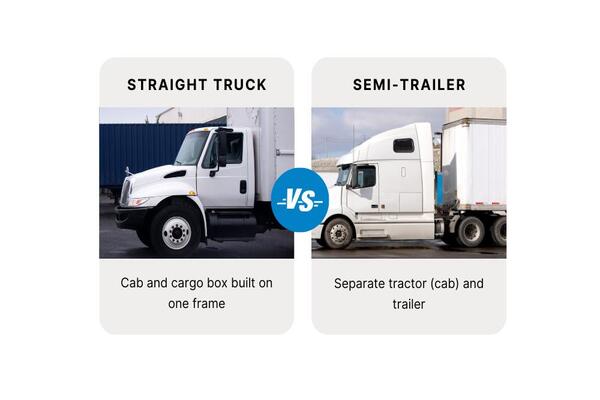
The cab, chassis, and cargo body are usually part of the same vehicle.
This configuration is often called a straight truck.
For example:
A box truck has an enclosed cargo body mounted directly behind the cab.
A dump truck has a dump body that allows the operator to load, transport, and unload materials.
A refrigerated truck has an insulated cargo body and refrigeration equipment for temperature-sensitive products.
These trucks normally do not require a separate semi-trailer to perform their primary transportation function.
Trucks are commonly used for:
The correct truck configuration depends on the type of work the vehicle needs to perform.
A truck can be designed for many different applications, but many trucks carry cargo directly on their own chassis instead of pulling a separate semi-trailer.
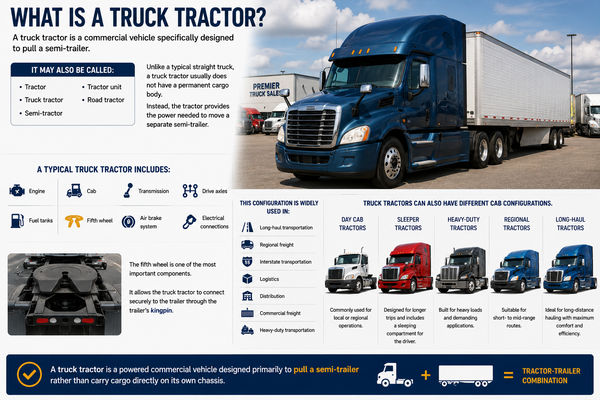
A truck tractor is a commercial vehicle specifically designed to pull a semi-trailer.
It may also be called:
Unlike a typical straight truck, a truck tractor usually does not have a permanent cargo body.
Instead, the tractor provides the power needed to move a separate semi-trailer.
A typical truck tractor includes:
The fifth wheel is one of the most important components.
It allows the truck tractor to connect securely to the trailer through the trailer's kingpin.
This configuration is widely used in:
Truck tractors can also have different cab configurations.
Common examples include:
A day cab is commonly used for local or regional operations.
A sleeper tractor is designed for longer trips and includes a sleeping compartment for the driver.
A truck tractor is a powered commercial vehicle designed primarily to pull a semi-trailer rather than carry cargo directly on its own chassis.
The biggest difference is how the vehicle carries and transports cargo.
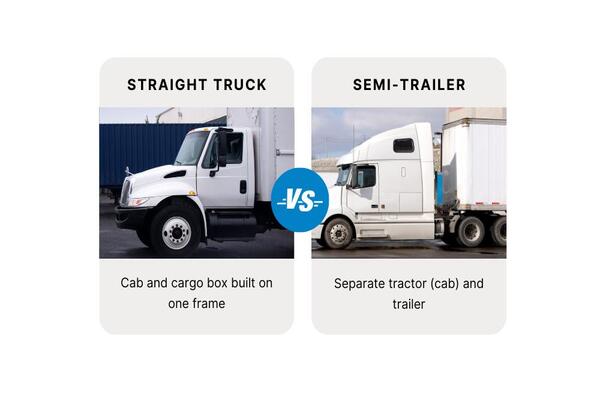
A conventional truck may carry cargo directly on its chassis.
A truck tractor normally pulls a separate semi-trailer that carries the cargo.
The basic configurations can be understood as:
Truck:
Cab + chassis + cargo body
Truck tractor:
Cab + chassis + fifth wheel + semi-trailer
For example:
A delivery company may use a box truck to transport packages directly to customers.
A long-distance transportation company may use a truck tractor to pull different trailers.
This gives truck tractors a major advantage in terms of flexibility.
A single tractor may be able to work with different trailers depending on the cargo.
For example:
A dry van can be used for general freight.
A refrigerated trailer can be used for food and temperature-sensitive products.
A flatbed trailer can be used for machinery and construction materials.
A specialized trailer can be used for oversized or unusual cargo.
A straight truck generally has a fixed cargo configuration.
The key difference is that a truck may carry its cargo directly, while a truck tractor is designed to provide power for a separate semi-trailer.
The fifth wheel is a critical component of a truck tractor.
It is mounted above the tractor's rear axles and provides the connection between the tractor and semi-trailer.
The trailer's kingpin locks into the fifth wheel.
This connection allows the tractor and trailer to operate as a single combination vehicle.
The fifth wheel helps the tractor:
Because the fifth wheel is a critical connection point, it should be inspected carefully when buying a used truck tractor.
Buyers should check:
Excessive wear or damage can create safety and maintenance concerns.
The fifth wheel must also be compatible with the trailer being used.
For used truck tractor buyers, the fifth wheel should be inspected as carefully as the engine, transmission, frame, and suspension.
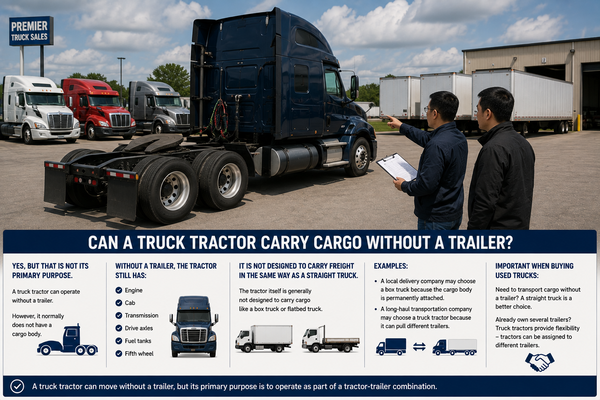
A truck tractor can operate without a trailer, but that is not its primary purpose.
Without a trailer, the tractor still has:
However, it normally does not have a cargo body.
This means the tractor itself is generally not designed to carry freight in the same way as a box truck or flatbed truck.
For example:
A local delivery company may choose a box truck because the cargo body is permanently attached.
A long-haul transportation company may choose a truck tractor because it can pull different trailers.
This difference is important when purchasing used commercial vehicles.
A buyer who needs to transport cargo without a separate trailer may need a straight truck instead of a truck tractor.
A buyer who already owns several trailers may prefer truck tractors because the tractors can be assigned to different trailers.
A truck tractor can move without a trailer, but its primary purpose is to operate as part of a tractor-trailer combination.
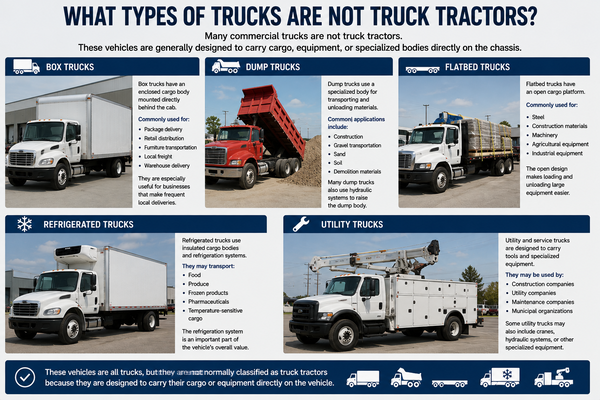
Many commercial trucks are not truck tractors.
These vehicles are generally designed to carry cargo, equipment, or specialized bodies directly on the chassis.
Box trucks have an enclosed cargo body mounted directly behind the cab.
They are commonly used for:
They are especially useful for businesses that make frequent local deliveries.
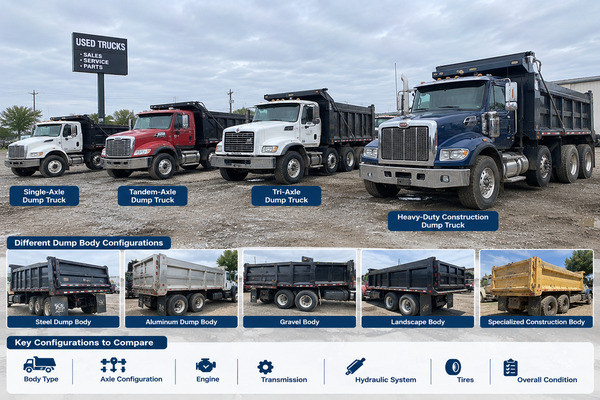
Dump trucks use a specialized body for transporting and unloading materials.
Common applications include:
Many dump trucks also use hydraulic systems to raise the dump body.
Flatbed trucks have an open cargo platform.
They are commonly used for:
The open design makes loading and unloading large equipment easier.
Refrigerated trucks use insulated cargo bodies and refrigeration systems.
They may transport:
The refrigeration system is an important part of the vehicle's overall value.
Utility and service trucks are designed to carry tools and specialized equipment.
They may be used by:
Some utility trucks may also include cranes, hydraulic systems, or other specialized equipment.
These vehicles are all trucks, but they are not normally classified as truck tractors because they are designed to carry their cargo or equipment directly on the vehicle.
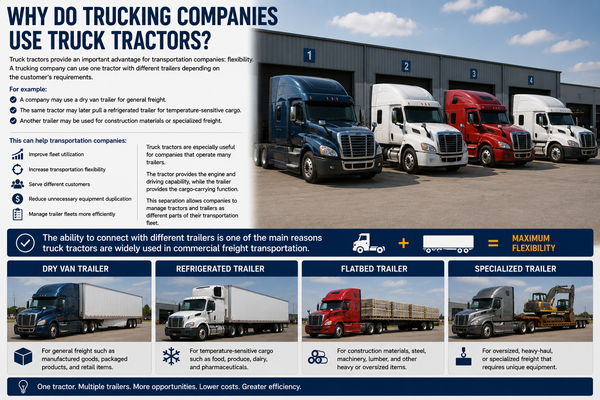
Truck tractors provide an important advantage for transportation companies: flexibility.
A trucking company can use one tractor with different trailers depending on the customer's requirements.
For example:
A company may use a dry van trailer for general freight.
The same tractor may later pull a refrigerated trailer for temperature-sensitive cargo.
Another trailer may be used for construction materials or specialized freight.
This can help transportation companies:
Truck tractors are especially useful for companies that operate many trailers.
The tractor provides the engine and driving capability, while the trailer provides the cargo-carrying function.
This separation allows companies to manage tractors and trailers as different parts of their transportation fleet.
The ability to connect with different trailers is one of the main reasons truck tractors are widely used in commercial freight transportation.
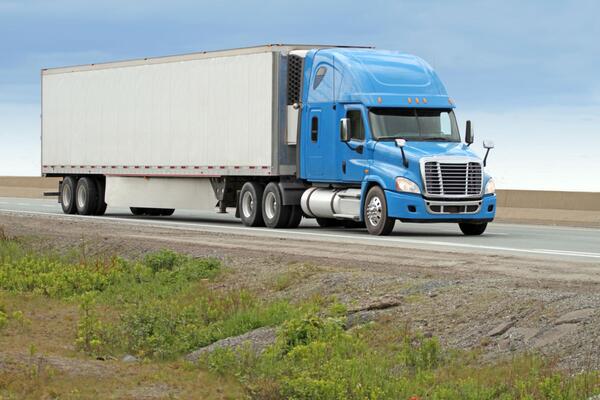
The price of a commercial vehicle depends on many factors.
These can include:
A truck tractor and a straight truck may have very different prices even when they are the same age.
For example:
A sleeper truck tractor may have a higher price because of:
A specialized straight truck may also have a high value because of its installed equipment.
For example:
A refrigerated truck may include a refrigeration unit.
A dump truck may include hydraulic equipment.
A utility truck may include cranes or specialized tools.
Therefore, buyers should not compare commercial trucks based only on purchase price.
They should also compare:
The best-value commercial vehicle is the one that provides the required capability without creating unnecessary operating costs.
![image placeholder: Commercial truck buyer comparing prices of truck tractors, sleeper trucks, day cabs, box trucks, and specialized trucks]
For long-distance freight transportation, a truck tractor is usually the more practical configuration.
Long-haul operations often require:
A sleeper tractor can provide a more practical working environment for drivers who spend extended periods on the road.
The tractor can also pull different trailers depending on the cargo.
For example:
This flexibility can be particularly valuable for transportation companies that serve multiple customers.
For businesses focused on long-haul freight transportation, a properly configured truck tractor is often more suitable than a conventional straight truck.
![image placeholder: Long-haul truck tractor with sleeper cab pulling a loaded semi-trailer on a North American highway]
For local delivery operations, a straight truck may be more practical.
Local delivery businesses often prioritize:
A box truck is a common choice for local delivery.
It can be used for:
A truck tractor may still be useful for regional distribution operations where trailers are moved between warehouses or distribution centers.
The right choice depends on:
Local delivery businesses should choose the vehicle configuration based on their routes and cargo requirements rather than simply choosing the largest truck available.
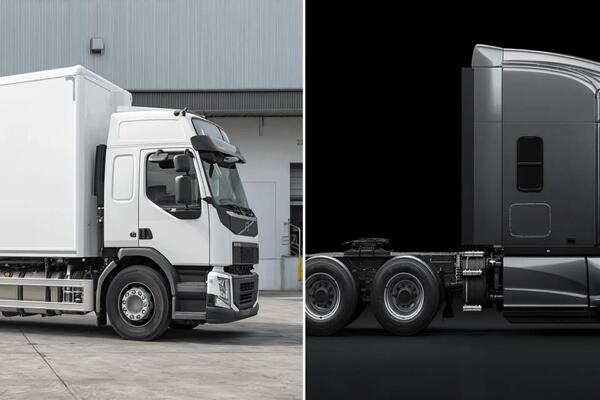
Buying a used truck tractor requires a detailed inspection.
The engine is important, but buyers should evaluate the entire vehicle.
Important areas include:
Buyers should review the engine for:
The transmission should also be checked for:
The frame should be inspected for:
The fifth wheel should be checked for:
Buyers should also inspect:
Maintenance records are especially valuable because they can help buyers understand how the truck was operated and maintained.
A used truck tractor should be evaluated as a complete operating system rather than simply as an engine and cab.
![image placeholder: Professional mechanic inspecting a used truck tractor including engine, transmission, fifth wheel, frame, suspension, tires, brakes, and electrical systems]
The inspection process for a conventional truck includes both the truck itself and its cargo body or specialized equipment.
Important areas may include:
For example:
A used refrigerated truck should be inspected for both the truck's mechanical condition and refrigeration system.
A dump truck should be inspected for:
A box truck should be inspected for:
The condition of the cargo body can have a significant effect on the truck's value.
A truck with a strong engine but serious cargo-body damage may still require substantial repairs before returning to service.
When buying a used truck, buyers should inspect both the vehicle and the equipment responsible for performing its specific business function.
![image placeholder: Professional mechanic inspecting a used commercial truck including cargo body, chassis, engine, hydraulic equipment, doors, tires, and brakes]
A truck tractor and semi-trailer are designed to operate as a combined transportation system.
The truck tractor provides:
The semi-trailer provides:
The two vehicles connect through the:
Depending on the trailer, additional equipment may also be required.
For example:
A refrigerated trailer has a refrigeration system.
A specialized trailer may have hydraulic or other equipment.
The tractor and trailer must therefore be compatible.
Buyers should confirm:
This is especially important when buying a used truck tractor for a specific fleet operation.
A truck tractor should always be evaluated together with the type of semi-trailer it is expected to pull.
![image placeholder: Detailed view of a truck tractor and semi-trailer showing fifth wheel, kingpin, air lines, electrical connections, and cargo trailer]
The terms "truck tractor" and "semi-truck" are often used interchangeably in everyday conversations.
However, buyers should understand the difference in terminology.
A truck tractor specifically refers to the powered unit designed to pull a semi-trailer.
The term semi-truck is commonly used in North America to describe the tractor, and sometimes the entire tractor-trailer combination depending on the context.
This can create confusion when buying used commercial vehicles.
For example:
An advertisement may say:
"Used semi-truck for sale."
But the listing may include:
Buyers should therefore carefully confirm what is included in the advertised price.
They should ask:
This is especially important for international buyers because shipping and transportation costs can change depending on whether the trailer is included.
When buying a "semi-truck," buyers should confirm whether the seller is offering the truck tractor only or a complete tractor-trailer combination.
![image placeholder: Chinese commercial truck buyer reviewing a used semi-truck listing to determine whether the sale includes the tractor only or both tractor and semi-trailer]
There is no single vehicle configuration that is best for every business.
The right choice depends on:
A truck tractor may be a better choice for:
A conventional truck may be more suitable for:
Before purchasing, buyers should ask:
For example:
A long-haul freight company may benefit from a sleeper truck tractor.
A local delivery company may benefit from a box truck.
A construction company may require a dump truck or specialized truck.
A logistics company may need multiple truck tractors and different trailer types.
The best commercial vehicle is not necessarily the largest or most powerful option. It is the vehicle configuration that matches the company's cargo, routes, equipment requirements, and operating budget.
The main differences can be summarized as follows:
| Feature | Truck | Truck Tractor |
|---|---|---|
| Main purpose | Carry cargo or equipment | Pull a semi-trailer |
| Cargo body | Usually installed on chassis | Usually not permanently installed |
| Fifth wheel | Usually not present | Standard component |
| Trailer required | Usually no | Normally designed to operate with a trailer |
| Common applications | Local delivery, construction, utility | Long-haul and regional freight |
| Trailer flexibility | Limited | High |
| Cargo configuration | Fixed or specialized | Depends on attached trailer |
| Sleeper configuration | Less common | Common for long-haul operations |
| Example | Box truck, dump truck, flatbed | Day cab tractor, sleeper tractor |
This comparison provides a simple way to understand the difference.
However, commercial vehicles can have many specialized configurations.
Some vehicles may have features that overlap between traditional categories.
Therefore, buyers should always review the actual specifications instead of relying only on the vehicle name used in an advertisement.
Understanding the actual configuration is more important than the terminology used in a truck listing.
![image placeholder: Detailed comparison of a truck and truck tractor showing cargo body, fifth wheel, semi-trailer, cab, chassis, and major components]
The best choice depends on the buyer's specific business requirements.
A truck tractor may provide greater flexibility for companies that regularly use semi-trailers.
A straight truck may provide greater simplicity for businesses that need a permanently mounted cargo body.
Before purchasing a used commercial vehicle, buyers should evaluate:
For international buyers, additional considerations may include:
The cheapest vehicle is not necessarily the best investment.
A properly maintained vehicle with the correct configuration can provide much better long-term value than a cheaper vehicle that does not match the intended application.
The goal should not simply be to find the lowest purchase price.
The goal is to find a vehicle that can reliably perform the required work and continue generating business value.
A truck or truck tractor is a business investment. The best choice is the one that matches the job, provides reliable performance, and delivers the lowest practical total cost of ownership.
![image placeholder: Chinese commercial truck buyer and professional mechanic completing a final comparison between a used truck and truck tractor before purchase]
这样就是和你之前的文章同一种格式:
#、##、--- 的 Markdown 结构
Tell us your requirements — brand, horsepower, year and quantity — and we'll match the right option for you.